
Winter Feeding Guide for Horse Owners
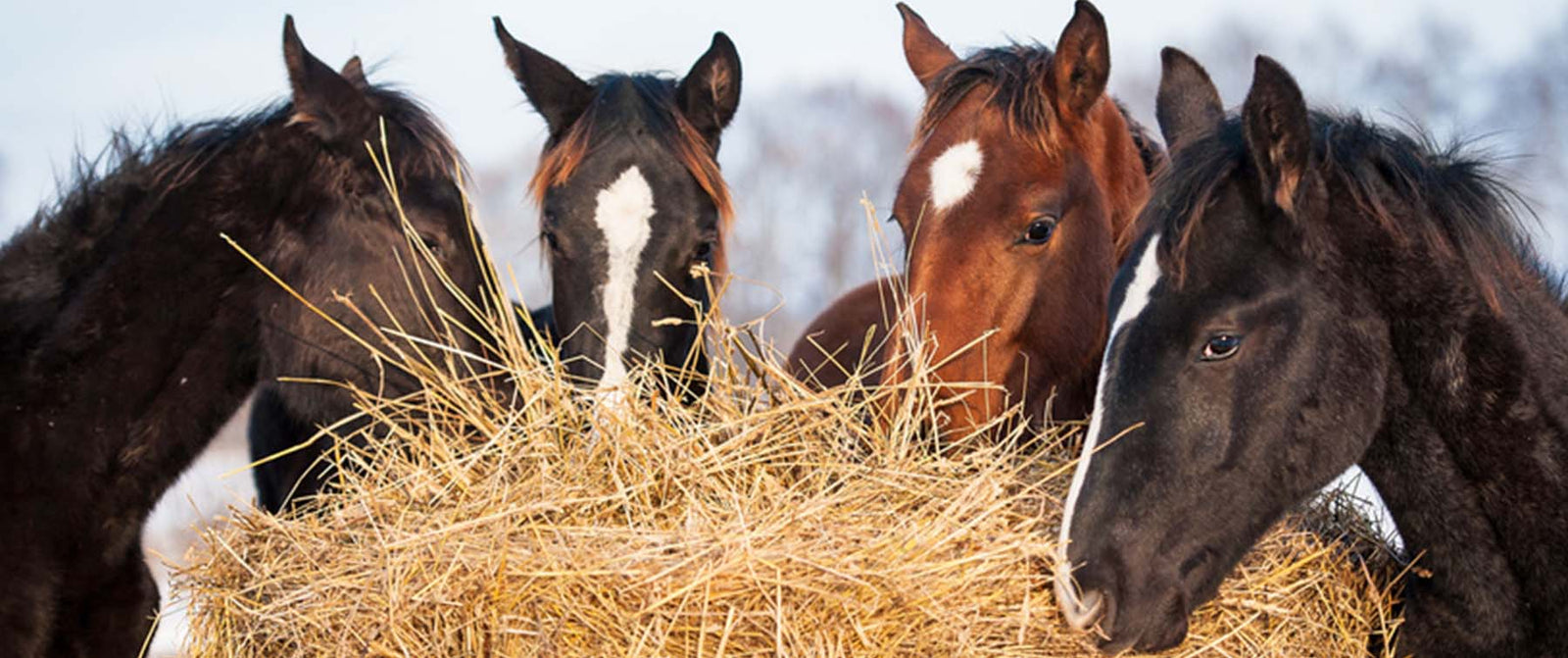

During this time of year there is little to no nutrition left in the grass. Some horses keep their weight quite well in this weather however, some are poor doers and need extra help. Read on to find out!
Horses turned out full time
As the quality and amount of grass is decreasing during this season the horses may need some extra foraging such as hay, sometimes it may be necessary to give hard feed as well.
For good doers they don’t need a mix or nuts, chaff and some vitamins and minerals are acceptable to feed these horses if they’re not losing condition rapidly. The excess weight should slowly drop off the horse so when the spring comes, they can put on condition without ending up overweight. The poor doers may require a little extra such as a conditioning mix to keep their weight up.

Stabled horses
There should always be hay available for them to forage on in their stable as they are natural forages. They should be fed a chaff and concentrated feed diet to keep them from loosing condition. Don’t let them become overweight, this could become a problem in the spring when the grass is full of nutrients making them put on even more weight. Since they are stabled and on hard feed, frequent exercise is very important to prevent stiffness and obesity leading to further health problems.

Older horses
Horses who have bad teeth or no teeth still want to chew on fibre. Supply a soft hay or some leafy alfalfa to their diet to keep their fibre and energy levels up without hurting their teeth.

Knowing how much feed to give
The amount of feed given to your horse should be worked out by using their body weight. Horses eat 2.5% of their body weight per day therefore to work out how much feed they need:
Body weight x 2.5%= Total amount of feed per day (kg)
Overall, it is important to know how your horse copes during the winter months and to be able to maintain their condition so that no problems will occur during the spring months. Horses must be exercised whilst on hard feed as it gives them energy, if they’re stabled and not getting energy burned off, they will become overweight.

Also in PetnPony Blog

Rugging a Horse According to Temperature: A Complete Guide for UK Horse Owners
Rugging a horse can be confusing during the UK's shifting winter weather. This guide explains how horses regulate temperature, when rugs are needed, risks of over or under rugging, and how live weather data can help you choose the right rug. Includes detailed advice for clipped and unclipped horses, turnout and stabled management, plus links to our Rug Temperature Guide.

How to Tell if Your Horse Is Too Hot or Too Cold
Knowing whether your horse is too hot or too cold can be challenging, especially with the UK's unpredictable weather. This guide explains simple checks you can use, signs of discomfort to look out for, and how factors like wind chill, rainfall and clip type affect rugging needs. Learn how to make confident rugging decisions based on your horse’s behaviour and the forecast.